
Computer Vision
Thresholding in Image Processing: Understanding Global, Otsu and Adaptive Methods
Nov 28, 2025·10 min
Standalone/Computer Vision
May 22, 2025·5 min read
Computer vision is the field of making machines understand the world through images and videos, just like we humans do with our eyes and brain. Whether it’s your phone unlocking when it sees your face or a self-driving car spotting a red light, it’s all thanks to computer vision.
But how did it all start? To teach machines how to see, scientists first looked at how humans see.
Computer vision is about teaching computers to understand what’s inside an image. Not just to look at pixels, but to actually figure out what those pixels mean.
Some common tasks in computer vision include:
Image classification — figuring out what the image contains
Object detection — finding where things are in the image
Segmentation — dividing an image into meaningful parts
Face recognition — matching faces with names
Today, computer vision is part of our daily lives, often without us noticing. Here are some real examples:
Phones — Face unlock and camera filters
Cars — Self-driving features like lane detection and pedestrian tracking
Hospitals — Analysing X-rays and MRIs to spot diseases
Shops — Smart checkouts that track products automatically
Farms — Drones scanning crops for health and growth
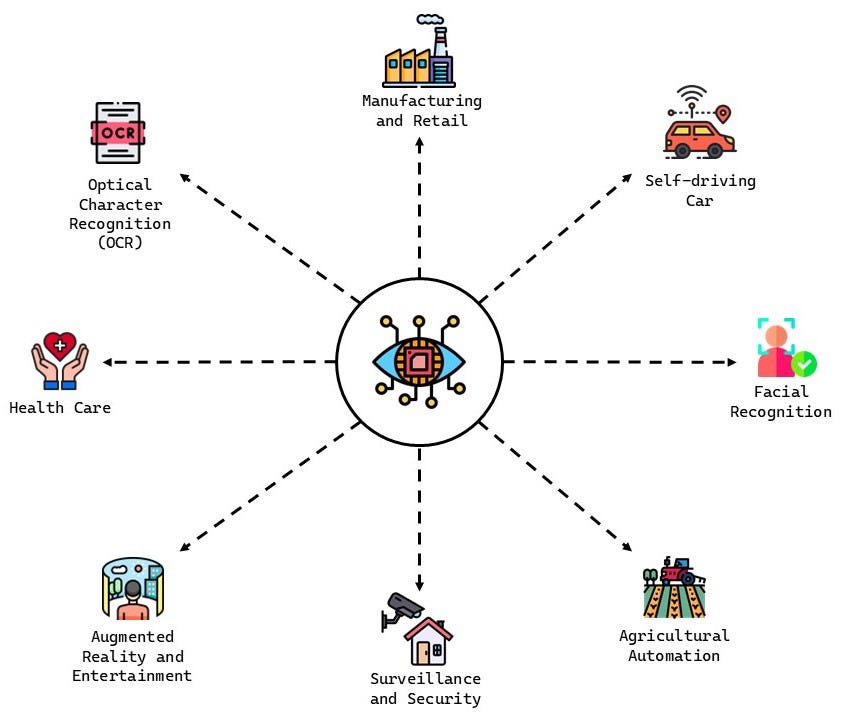
Factories — Machines checking for cracks or defects in products
Sports — Cameras tracking player movements and strategies
Social media — Auto-tagging people in photos
AR apps — Placing virtual glasses or masks on your face
To teach machines how to see, scientists first needed to understand how humans see. This led them to study the visual cortex, a part of the brain located at the back of the head.
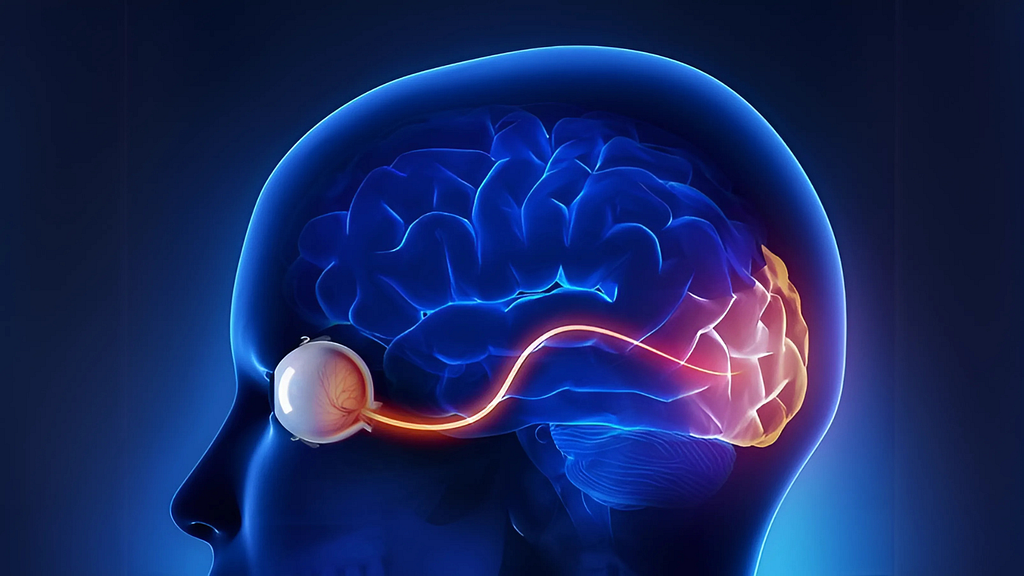
They found that vision isn’t understood all at once. Instead, the brain processes it in stages — each part of the visual cortex handles a different aspect of what we’re looking at. This layered structure became the foundation of convolutional neural networks (CNNs) in deep learning, which also process visual data step-by-step.
Here’s a deeper look at the main areas of the visual cortex and how each one inspired features in computer vision:
V1 is the first area that receives raw visual input. It detects very simple patterns: straight lines, edges, orientations, and basic motion.
In the brain: It builds the basic outlines of what we’re seeing.
In machines: This is similar to the first layer in a CNN, which applies filters to detect edges and gradients.
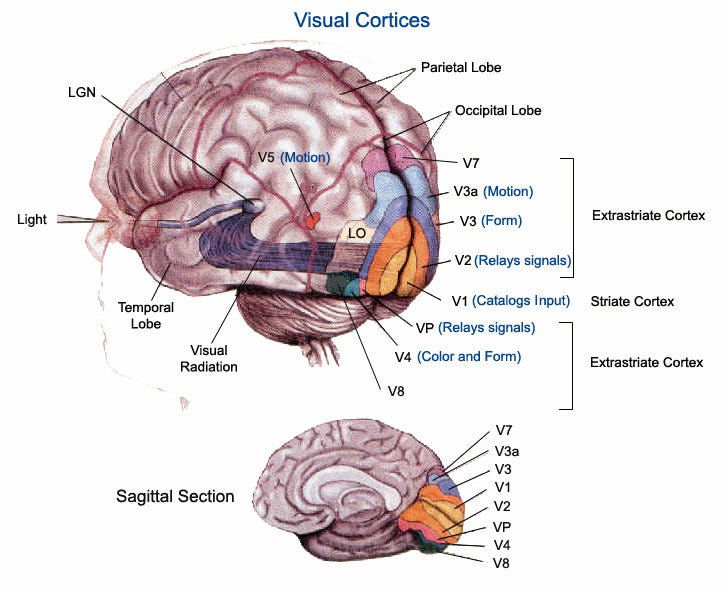
V2 builds on what V1 does. It starts recognizing more complex combinations of edges, angles, and patterns. It also processes stereoscopic depth — our ability to sense how far objects are from us.
In the brain: V2 helps us see 3D depth and more structured shapes.
In machines: It inspires 3D reconstruction, stereo matching, and more refined edge detection.
V3 continues the job by integrating motion, shape, and early color processing. It handles dynamic form perception — how something’s shape changes as it moves.
In the brain: V3 contributes to how we perceive moving objects with depth and form.
In machines: This helps build systems that track moving objects, not just detect them.
V3a deals specifically with textures — it allows the brain to separate regions based on texture differences.
In the brain: It helps you tell the difference between a smooth road and a patch of gravel.
In machines: Texture-based classification (used in defect detection, skin analysis, etc.) is modeled on this idea.
V3b is responsible for grouping similar visual elements together. It helps with boundary detection, grouping similar shapes, and breaking down a scene into meaningful parts.
In the brain: It allows you to instantly “group” things like the trees in a forest.
In machines: This inspired segmentation algorithms like Mask R-CNN, where pixels are grouped by object.
V4 is heavily involved in color processing and object recognition. It brings together edges, curves, and color to help us recognize familiar objects.
In the brain: You use V4 to recognize a red apple, even if the lighting changes.
In machines: Mid-level CNN layers do the same — combining shapes and color to recognize objects.
V7 is believed to play a big role in recognizing faces and complex shapes. It helps identify known patterns like eyes, noses, and outlines.
In the brain: It helps you recognize a friend even in poor lighting.
In machines: This inspired deep face recognition models like FaceNet or DeepFace.
MT handles complex motion tracking, such as detecting direction and speed. It also contributes to attention — focusing on the moving part of a scene.
In the brain: You track a moving ball mid-air with MT.
In machines: Optical flow, action detection, and motion-based attention mechanisms come from this concept.
MST is involved in higher-order visual processes like working memory and mental imagery. It helps us remember visual scenes and imagine how things might look if moved or rotated.
In the brain: It helps you picture your room while you’re at the store.
In machines: Video memory systems, multi-frame tracking, and long-term context models are built on this principle.
Just like the human brain, modern computer vision systems don’t try to understand the entire image at once. They process it layer by layer.
First layers detect edges and colors
Middle layers build shapes and textures
Later layers identify objects, recognize faces, or understand scenes
This structure lets machines “understand” visuals in a way that’s inspired directly by how our brain has evolved to do the same.
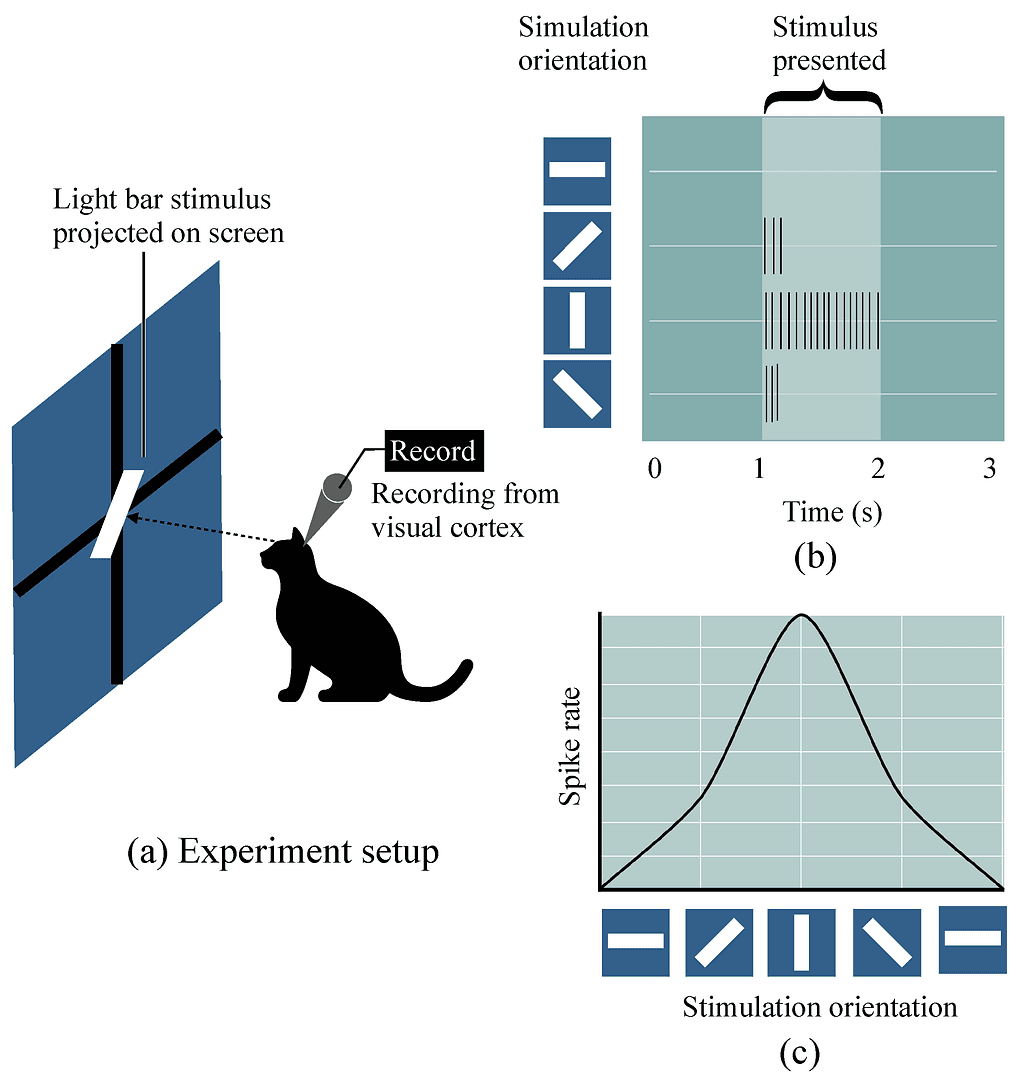
In the 1950s and 60s, scientists Hubel and Wiesel discovered that specific neurons fired only when shown specific visual patterns, like vertical lines or moving dots. These were called feature detectors.
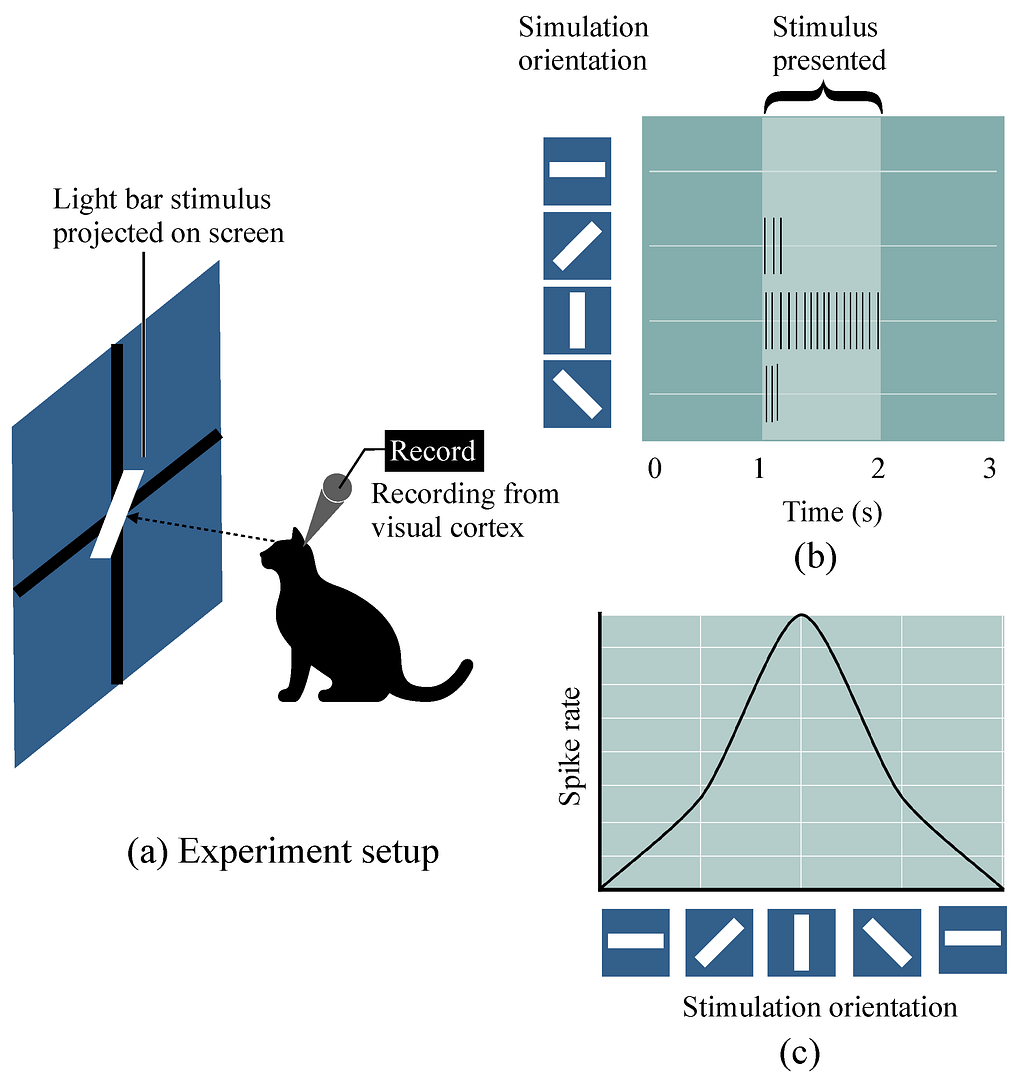
That idea — of building up understanding through specialized detectors — inspired the very first models in artificial vision. Today, deep learning systems like CNNs use this principle to learn from raw pixel data instead of needing hand-written rules.
Computer vision is one of the most impactful fields in modern technology and it all started by looking inward, at how our own brain processes visuals. The human visual cortex works step-by-step, with each region focusing on a specific part of vision. This idea became the foundation of how machines learn to see today.
Computer Vision
Nov 28, 2025·10 min